
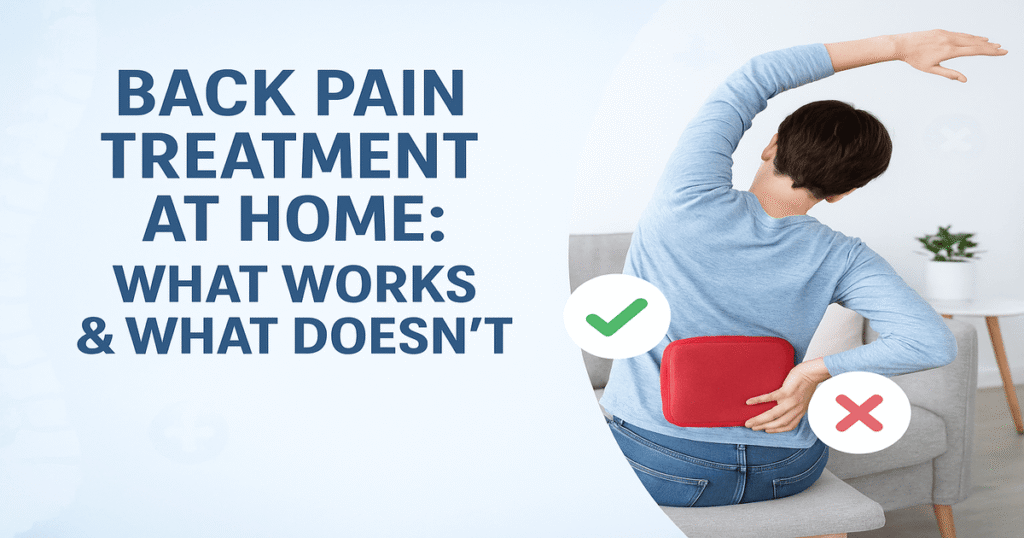
Back pain affects approximately 80% of adults at some point in their lives, making it one of the most common reasons people seek medical care. While professional treatment is often necessary, understanding effective home management strategies can significantly improve your recovery and prevent future episodes.
Understanding Your Back Pain: When Home Treatment is Appropriate
Common Causes of Back Pain That Respond Well to Home Care
Mechanical back pain resulting from muscle strain, poor posture, or minor ligament sprains typically responds well to home treatment. These conditions often develop from:
- Prolonged sitting or standing in poor postures
- Sudden lifting or twisting movements
- Muscle tension from stress or overuse
- Minor workplace injuries
Research published in the British Journal of Sports Medicine indicates that most episodes of acute lower back pain improve within 4-6 weeks with appropriate self-management strategies.
Warning Signs That Require Professional Physiotherapy Intervention
Seek immediate professional assessment if you experience:
- Pain radiating down your leg below the knee (possible nerve involvement)
- Numbness or tingling in your legs or feet
- Loss of bladder or bowel control
- Unexplained weight loss alongside back pain
- Pain that worsens at night or doesn’t improve with rest
- History of cancer, osteoporosis, or prolonged steroid use
- Pain following a significant fall or accident
If you’re experiencing any of these symptoms in Islamabad or Rawalpindi, our team at HomePhysioPro provides immediate home-based assessments. Book your consultation now
How Long Should You Try Home Remedies Before Seeking Help?
The general guideline from clinical practice suggests trying conservative home treatment for 2-4 weeks for non-severe back pain. However, if your pain:
- Significantly limits your daily activities
- Shows no improvement after 7-10 days
- Progressively worsens despite home care
- Recurs frequently
…it’s time to consult a qualified physiotherapist who can identify the underlying cause and create a targeted treatment plan.
Evidence-Based Home Treatments That Actually Work
Heat and Cold Therapy: The Right Way to Apply Them
Temperature therapy is one of the most accessible and effective home treatments when used correctly:
Cold Therapy (First 48-72 hours)
- Apply ice packs for 15-20 minutes every 2-3 hours
- Reduces inflammation and numbs acute pain
- Never apply ice directly to skin; use a thin towel
Heat Therapy (After 72 hours)
- Use heating pads or warm baths for 15-20 minutes
- Increases blood flow and relaxes tight muscles
- Avoid sleeping with heating pads
A systematic review in the Cochrane Database found that heat therapy provides short-term pain relief and functional improvement for acute and subacute lower back pain.
Pro tip: Combining heat therapy with our specially formulated pain relief oil enhances muscle relaxation and accelerates recovery. Our natural pain relief oil contains therapeutic-grade ingredients that penetrate deep into tissues. Order your pain relief oil today
Gentle Stretching Exercises for Immediate Relief
Clinical guidelines from the American College of Physicians recommend staying active with gentle movement rather than prolonged rest. Basic stretches that help include:
- Knee-to-chest pulls (hold 20-30 seconds, repeat 3 times)
- Gentle spinal rotation while lying on your back
- Cat-cow stretches (10 repetitions)
However, generic exercises may not address your specific condition. Our physiotherapists create personalized exercise programs based on your exact pain pattern and movement limitations.
Core Strengthening: Building Long-Term Back Support
Research consistently shows that core muscle weakness contributes to chronic back pain. The lumbar spine requires support from deep core muscles including the transverse abdominis and multifidus.
Building core strength gradually through:
- Pelvic tilts
- Modified planks (starting with wall or incline planks)
- Bird dog exercises
- Dead bug variations
Evidence from the Journal of Orthopaedic & Sports Physical Therapy demonstrates that specific stabilization exercises reduce pain recurrence rates by up to 50%.
Proper Posture Correction Techniques Throughout Your Day
Poor posture creates sustained mechanical stress on spinal structures. Key posture principles include:
While Sitting:
- Keep feet flat on the floor
- Maintain a slight curve in your lower back
- Position computer screens at eye level
- Take standing breaks every 30-40 minutes
While Standing:
- Distribute weight evenly on both feet
- Avoid locking your knees
- Keep shoulders relaxed and back
While Lifting:
- Bend at your knees, not your waist
- Hold objects close to your body
- Avoid twisting while holding weight
Our women’s health physiotherapy specialists also address posture-related back pain common during pregnancy and postpartum.
Over-the-Counter Pain Management: What Physiotherapists Recommend
According to clinical practice guidelines, appropriate use of NSAIDs (like ibuprofen) or acetaminophen can help manage pain while you implement movement-based recovery strategies. Always:
- Follow recommended dosages
- Take with food to prevent stomach irritation
- Use for short-term relief (not exceeding 7-10 days without medical advice)
- Never rely on medication alone without addressing the underlying cause
Home Remedies That Don’t Work (And Might Make Things Worse)
Complete Bed Rest: Why It’s Counterproductive
Contrary to once-popular belief, extended bed rest actually delays recovery. A landmark study in the New England Journal of Medicine found that patients who continued ordinary activities as tolerated recovered faster than those prescribed bed rest.
Prolonged inactivity leads to:
- Muscle deconditioning and weakness
- Joint stiffness
- Increased pain sensitivity
- Higher risk of chronic pain development
Aggressive Stretching and “No Pain, No Gain” Approaches
Pushing through significant pain during stretches can:
- Aggravate inflamed tissues
- Create protective muscle spasms
- Potentially worsen underlying injuries
Pain is your body’s warning system. Gentle discomfort during stretching is acceptable, but sharp or increasing pain indicates you’re overdoing it.
Relying Solely on Pain Medication Without Movement
While medication provides temporary relief, it doesn’t address the biomechanical factors causing your pain. This approach often leads to:
- Dependency on pain relievers
- Delayed functional recovery
- Higher risk of chronic pain
- Potential medication side effects
Online Exercise Programs Without Proper Assessment
Generic YouTube exercises or fitness apps cannot account for:
- Your specific pain pattern
- Underlying structural issues
- Individual movement compensations
- Contraindicated movements for your condition
Research in the Journal of Physiotherapy shows significantly better outcomes when exercises are individually prescribed rather than following generic protocols.
Expensive Gadgets and Unproven Devices
Many heavily marketed devices lack scientific validation. Be skeptical of products promising “miracle cures” including:
- Magnetic therapy devices
- Inversion tables (without professional guidance)
- Electronic muscle stimulators marketed for home use
- “As seen on TV” back pain solutions
The 5 Most Effective At-Home Exercises for Back Pain Relief
Important disclaimer: These exercises are appropriate for general mechanical back pain. Stop immediately if you experience increased pain, numbness, or tingling. Always consult a physiotherapist for personalized recommendations.
Pelvic Tilts: Technique and Benefits
How to perform:
- Lie on your back with knees bent, feet flat
- Gently flatten your lower back against the floor by tilting your pelvis
- Hold for 5 seconds
- Return to neutral
- Repeat 10-15 times
Benefits: Activates deep core muscles and improves awareness of neutral spine position.
Cat-Cow Stretch: How to Do It Correctly
How to perform:
- Start on hands and knees (tabletop position)
- Arch your back, lifting chest and tailbone (cow pose)
- Round your spine, tucking chin and tailbone (cat pose)
- Move slowly between positions
- Repeat 10 times
Benefits: Increases spinal flexibility and reduces stiffness in back muscles.
Knee-to-Chest Stretch: Step-by-Step Guide
How to perform:
- Lie on your back with both knees bent
- Bring one knee toward your chest
- Hold behind the thigh (not on the knee joint)
- Hold for 20-30 seconds
- Repeat 3 times each leg
Benefits: Stretches lower back and gluteal muscles while reducing pressure on spinal nerves.
Bird Dog Exercise: Building Stability Safely
How to perform:
- Start in tabletop position
- Slowly extend one arm forward and opposite leg back
- Keep your back flat and core engaged
- Hold for 5-10 seconds
- Return to start and alternate sides
- Perform 8-10 repetitions per side
Benefits: Strengthens core stabilizers and improves coordination essential for spine protection.
Child’s Pose: Gentle Relief for Lower Back Tension
How to perform:
- Kneel on the floor with big toes touching
- Sit back on your heels
- Stretch arms forward on the floor
- Rest your forehead down
- Hold for 30-60 seconds, breathing deeply
Benefits: Gently stretches lower back muscles and promotes relaxation.
Want to ensure you’re performing these exercises correctly? Our physiotherapists provide hands-on guidance through home visits in Islamabad and Rawalpindi. We also offer therapeutic exercises specifically designed for pediatric patients with back-related issues.
Creating Your Personalized Home Back Pain Management Plan
Assessing Your Pain Level and Movement Limitations
Track these key factors:
- Pain intensity (0-10 scale)
- Activities that worsen or relieve pain
- Time of day when pain is worst
- Movement directions that feel most limited
This information helps identify patterns and guides treatment decisions.
Daily Routine Modifications That Reduce Back Strain
Protect your back throughout daily activities:
Morning routine:
- Roll to your side before sitting up from bed
- Perform gentle stretches before starting your day
- Apply our pain relief oil to tight areas
During the day:
- Set hourly reminders to change positions
- Use proper lifting techniques consistently
- Stay hydrated to maintain disc health
Evening routine:
- Practice relaxation techniques to reduce muscle tension
- Apply heat therapy if beneficial
- Sleep in supportive positions (side-lying with pillow between knees)
Ergonomic Adjustments for Your Home and Workspace
Evidence from occupational health research shows that proper ergonomics significantly reduces back pain incidence:
- Adjust chair height so feet rest flat
- Position monitors to avoid neck strain
- Use lumbar support cushions
- Ensure adequate lighting to prevent awkward postures
Tracking Your Progress: When to Continue and When to Escalate
Positive progress indicators:
- Gradual pain reduction
- Increased ability to perform daily activities
- Improved range of motion
- Decreased morning stiffness
Warning signs requiring professional intervention:
- No improvement after 2 weeks
- Pain spreading to new areas
- Increasing pain despite compliance with home treatment
- Development of new neurological symptoms
Why Professional Physiotherapy Assessment Makes Home Treatment More Effective
How a Physiotherapist Identifies Your Specific Back Pain Type
Professional assessment includes:
- Detailed movement analysis
- Neurological screening
- Postural evaluation
- Palpation of muscles and joints
- Special tests to identify specific structures involved
This comprehensive evaluation reveals the exact cause of your pain, which cannot be determined through self-assessment.
Getting a Customized Exercise Program vs. Generic Online Advice
Research published in The Spine Journal demonstrates that individualized exercise programs produce significantly better long-term outcomes compared to generic approaches. A qualified physiotherapist considers:
- Your current fitness level
- Specific movement dysfunctions
- Pain presentation patterns
- Lifestyle demands
- Previous injuries or conditions
Preventing Recurring Back Pain with Expert Guidance
Studies show that 70% of people experience recurrent back pain episodes. Professional physiotherapy reduces this risk through:
- Identifying and correcting underlying biomechanical issues
- Teaching proper movement patterns
- Addressing muscle imbalances
- Providing long-term prevention strategies
The Role of Manual Therapy in Accelerating Recovery
Manual therapy techniques performed by trained physiotherapists include:
- Joint mobilizations
- Soft tissue release
- Myofascial techniques
- Neural mobilizations
Systematic reviews indicate that manual therapy combined with exercise produces better outcomes than exercise alone for certain back pain conditions.
When Home Treatment Isn’t Enough: Recognizing the Need for Professional Care
Red Flags: Symptoms That Demand Immediate Attention
Seek urgent medical evaluation for:
- Sudden onset of severe back pain with fever
- Progressive leg weakness
- Saddle anesthesia (numbness in groin/inner thigh area)
- Recent significant trauma
- Severe pain unrelieved by any position
- Unexplained weight loss with back pain
Chronic vs. Acute Back Pain: Different Approaches
Acute back pain (less than 6 weeks):
- Usually responds well to conservative home treatment
- Focus on pain management and gradual return to activity
- Often resolves with minimal intervention
Chronic back pain (more than 3 months):
- Requires a comprehensive assessment
- Often involves central sensitization
- Benefits from a multidisciplinary approach
- Needs addressing of psychological and social factors
HomePhysioPro specializes in both acute and chronic pain management with 8+ years of experience treating patients in Islamabad and Rawalpindi. Contact our expert team
How Physiotherapy Can Complement Your Home Care Routine
Professional physiotherapy doesn’t replace home management; it enhances it by:
- Providing an accurate diagnosis
- Teaching proper exercise technique
- Applying hands-on treatments
- Adjusting your program as you progress
- Offering accountability and motivation
What to Expect in Your First Physiotherapy Session
Your initial assessment typically includes:
- Detailed history (20-30 minutes)
- Pain characteristics and behavior
- Previous treatments
- Medical history
- Activity limitations
- Physical examination (30-40 minutes)
- Posture analysis
- Movement assessment
- Strength and flexibility testing
- Special tests
- Treatment plan discussion (10-15 minutes)
- Diagnosis explanation
- Proposed treatment approach
- Expected timeline
- Home exercise prescription
- Initial treatment (20-30 minutes)
- Manual therapy techniques
- Therapeutic exercises
- Pain relief modalities
Take the Next Step: Get a Professional Assessment for Lasting Relief
Why Wait? Early Intervention Prevents Long-Term Problems
Research consistently shows that early physiotherapy intervention:
- Reduces the likelihood of chronic pain development
- Decreases total treatment duration
- Lowers healthcare costs
- Improves long-term functional outcomes
- Reduces risk of recurrence
The longer you wait, the more complex your condition may become as compensatory patterns develop.
Our Comprehensive Back Pain Assessment Process
At HomePhysioPro, we provide:
✅ Thorough evaluation by experienced physiotherapists with over 8 years of expertise
✅ Evidence-based treatment using the latest research-backed techniques
✅ Personalized exercise programs tailored to your specific condition
✅ Convenient home service in Islamabad and Rawalpindi—no need to travel while in pain ✅ Affordable pricing with transparent costs and no hidden fees
✅ Complementary products, including our therapeutic pain relief oil for enhanced recovery ✅ 24/7 availability for urgent cases and emergencies
We treat back pain resulting from:
- Muscle strains and ligament sprains
- Disc-related problems
- Postural dysfunction
- Workplace injuries
- Sports injuries
- Post-surgical rehabilitation
- Pregnancy-related back pain
- Age-related spinal changes
Flexible Treatment Options: In-Home Services Available
Why choose home-based physiotherapy?
- Comfort: Receive treatment in your own environment
- Convenience: No commute time or parking hassles
- Privacy: One-on-one attention without clinic distractions
- Family involvement: Your family can learn proper techniques to support your recovery
- Real-world assessment: We see how your home setup may be contributing to your pain
- Consistency: Easier to maintain regular appointments
Our service areas: We proudly serve patients throughout Islamabad and Rawalpindi, bringing professional physiotherapy directly to your doorstep.
Start Your Recovery Journey Today
Don’t let back pain control your life. Whether you need:
- Professional assessment to identify the root cause of your pain
- Customized treatment plan designed specifically for your condition
- Natural pain relief through our therapeutic oil
- Specialized care for women’s health, pediatric, or musculoskeletal conditions
HomePhysioPro is here to help you move better, feel better, and live pain-free.
Contact Us Now:
Book your home physiotherapy session:
- Visit: https://homephysiopro.com/
- Available for both men and women (female physiotherapists available)
- Serving Islamabad and Rawalpindi
- 24/7 emergency services available
Order Our Pain Relief Oil:
Complement your physiotherapy treatment with our specially formulated natural pain relief oil. Developed by physiotherapy experts, this therapeutic-grade oil provides:
- Deep tissue penetration
- Natural anti-inflammatory properties
- Long-lasting pain relief
- Enhanced muscle relaxation
Order your pain relief oil today and experience the difference professional-grade products make in your recovery. Remember: While home treatment is valuable, professional guidance ensures you’re on the fastest, safest path to recovery. With 8+ years of trusted service in Islamabad and Rawalpindi, HomePhysioPro has successfully treated hundreds of patients with various back pain conditions.